

How TMS
Works
A plain guide to what TMS is, how it works, and what to expect so you can decide whether it's right for you.
THE BASICS
What is TMS?
Transcranial Magnetic Stimulation (TMS) is a non-invasive, FDA-cleared treatment that uses brief magnetic pulses, similar in strength to an MRI, to gently stimulate targeted areas of the brain without surgery or anesthesia.
It isn't surgery and it isn't a medication, it's an outpatient treatment that works by targeting specific brain circuits rather than affecting the whole body. That focus is why TMS is best known for treating depression, and why it can also help with related conditions such as anxiety, OCD, and PTSD. Your provider reviews your history to decide whether it's a fit and how to tailor it to you.

The mechanism
How it works
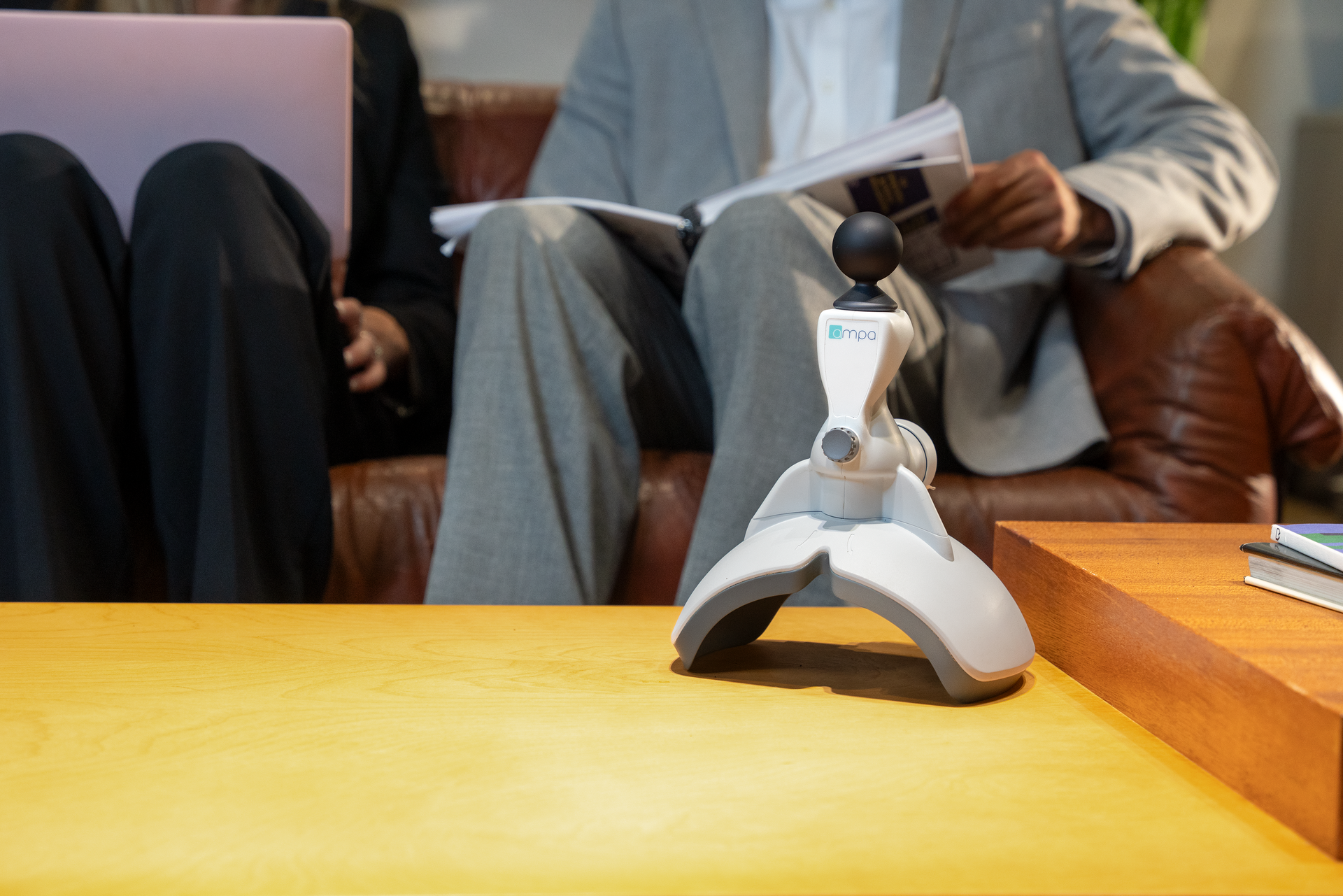
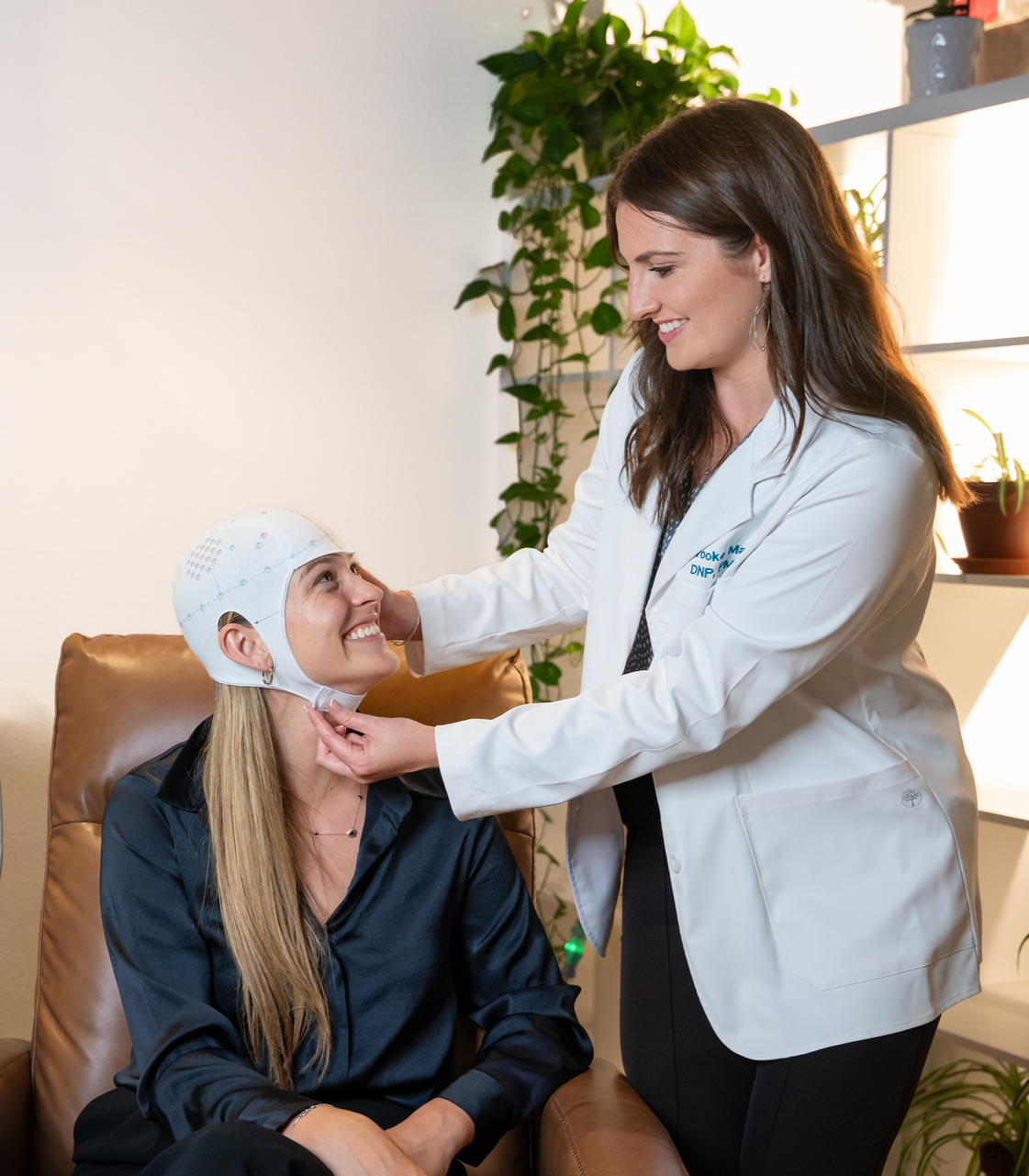
A small, cushioned coil rests gently against your scalp and sends precise magnetic pulses through the skull. Those pulses create tiny electrical currents in specific pathways of the brain. For depression, we focus on an area near the front of the head called the left dorsolateral prefrontal cortex (DLPFC). It helps regulate mood, and during depression it's often underactive, which is why it's the area we target.
Why it works & the
accelerated
approach
Repeated stimulation helps retrain brain circuits, restoring normal neural communication over time. To maximize treatment efficiency, our accelerated protocol pairs back-to-back sessions with d-cycloserine - a medication that acts as a neuroplasticity enhancer, priming brain cells to form and strengthen new connections more rapidly.
During & after
What you'll experience
Awake and alert
You stay fully awake, sitting comfortably in a chair for the whole session.
A gentle tapping
You can drive yourself home and go straight back to work or daily life.
Zero downtime
You can drive yourself home and go straight back to work or daily life.
Mild, brief after-effects
Some scalp tenderness or a faint headache may occur at first, but it typically resolves quickly.

Results
The evidence
so far
Accelerated TMS protocols with d-cycloserine allow patients to complete treatment far faster than traditional 6-week regimens. Relief can last for months to years for many patients.
Your day
How your treatment day
works

Accelerated schedule
Short sessions run through the day with 30-minute rests in between and can be split across two days if that suits you better.

Accelerated schedule
Short sessions run through the day with 30-minute rests in between and can be split across two days if that suits you better.

Priming your brain
A single morning dose of d-cycloserine on treatment day helps your brain respond and adapt faster.

Priming your brain
A single morning dose of d-cycloserine on treatment day helps your brain respond and adapt faster.

Built for busy lives
Standard TMS means daily visits for six weeks, ours delivers the full course in a fraction of the time.

Built for busy lives
Standard TMS means daily visits for six weeks, ours delivers the full course in a fraction of the time.
Financial & clinical context: Because this rapid, single-day approach is newer than the standard 6-week protocol, it is currently an out-of-network, self-pay treatment and is not covered by insurance.
Still deciding?
Let's
talk it through
A free 15-minute call with Michael - no charge, no pressure, and a straight answer about the right treatment for you.